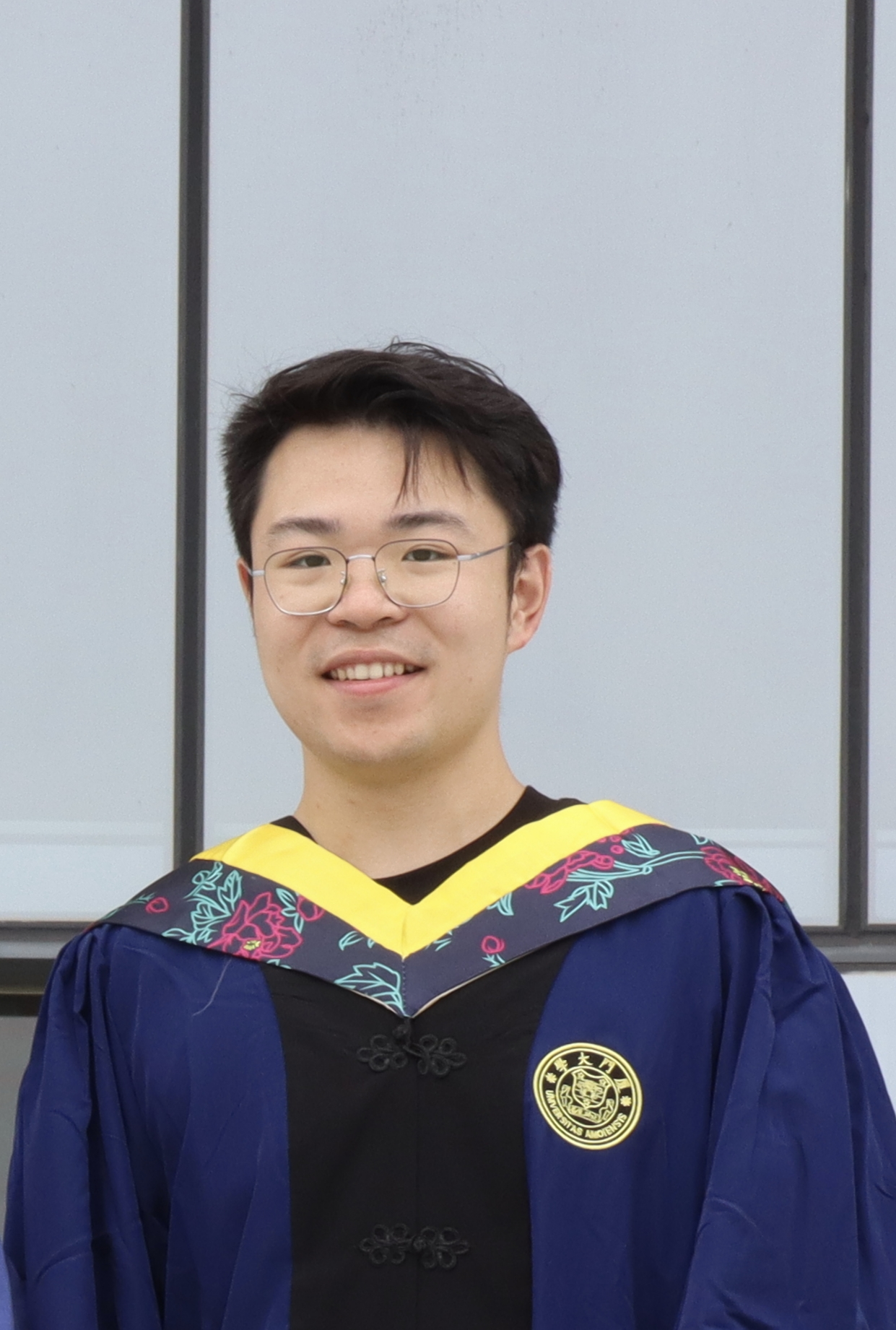
Yang Yan
AI for Science | Computer Vision | Representation Learning | Structural Biology
I develop foundation models, automated workflows, and open-source tools that help structural biologists recover 3D molecular structures from noisy cryo-EM images, making high-resolution biological discovery more scalable, reproducible, and accessible.
Research Profile
Structural biology seeks to understand life at the molecular level: how proteins, complexes, and molecular machines are shaped, how they move, and how their structures explain biological function, interactions, and disease mechanisms. Cryo-electron microscopy (cryo-EM) has become one of the central technologies for this goal because it can image biomolecules close to their native states and support high-resolution 3D structure determination.
The computational challenge is that cryo-EM data are not direct 3D structures. A typical experiment produces large collections of extremely noisy 2D particle images. The same molecule may appear in many orientations, adopt multiple conformations, or coexist with other molecular species. Turning these data into reliable structural insight often requires expert decisions across particle selection, classification, heterogeneity analysis, and reconstruction.
I am a PhD candidate in computer science, jointly trained at Zhejiang University and Westlake University. My research uses self-supervised learning and foundation models to learn transferable representations of cryo-EM particles. These representations support particle-quality ranking, structural classification, pose clustering, heterogeneity analysis, and automated reconstruction.
My recent work introduced Cryo-IEF, a foundation model for cryo-EM particle processing pretrained on approximately 65 million particle images. This direction is extended by CryoDECO, which uses foundation-model priors to analyze compositional and conformational heterogeneity. I also build practical software systems, including CryoWizard and cryodata, that turn these models into reusable tools for cryo-EM workflows.
Research Vision
My long-term goal is to build AI systems that make structural biology more automated, data-driven, and capable of resolving molecular structures and dynamics in native-like contexts. Rather than treating structure determination as a sequence of isolated manual steps, I am interested in models that can learn from large-scale cryo-EM and cryo-ET data, transfer across datasets, and assist scientists in reasoning about molecular state.
Building on the CryoDECO idea that foundation-model priors can reduce the circular dependency between classification and reconstruction, I am interested in adaptive manifold intelligence: models that infer the intrinsic degrees of freedom of a sample, choose appropriate latent capacity, and move beyond static structure determination toward continuous maps of biological state space. I am also interested in agent-based structural-biology systems that plan reconstruction strategies, diagnose failure modes, select data-processing actions, and connect imaging data with biochemical and multimodal biological evidence.
The broader goal is panoramic structural biology: moving from single purified targets toward AI-guided discovery of molecular machines, transient interactions, and conformational dynamics directly from complex native mixtures.
Education
Ph.D. Candidate in Computer Science
Zhejiang University / Westlake University
Joint Ph.D. program supervised by Prof. Fajie Yuan and Prof. Huaizong Shen. Research: foundation models for cryo-EM image processing, automated workflows, and heterogeneity analysis.
M.S. in Translational Medicine (Engineering)
Xiamen University
National Institute of Diagnostics and Vaccine Development in Infectious Diseases, supervised by Prof. Ningshao Xia. Research: machine learning for medical image analysis.
B.S. in Electrical Information Engineering
Northeastern University (Qinhuangdao)
Research included machine-learning applications in localization.
Selected Publications
A comprehensive foundation model for cryo-EM image processing
Yang Yan, Shiqi Fan, Fajie Yuan, Huaizong Shen. Nature Methods, 23(1), 88-95, 2026. DOI: 10.1038/s41592-025-02916-8.
Artificial intelligence foundation model automates cryo-EM structure determination
Yang Yan, Huaizong Shen. Nature Methods Research Briefing, 23, 26-27, 2026. DOI: 10.1038/s41592-025-02917-7.
CryoDECO: Deconstructing Extreme Compositional and Conformational Heterogeneity in Cryo-EM via Foundation Model Priors
Yang Yan, Yanwanyu Xi, Shiqi Fan, Yifei Wang, Ziyun Tang, Fajie Yuan, Huaizong Shen. LangTaoSha Preprint Server, 2026. DOI: 10.65215/LTSpreprints.2025.12.30.000075.
Research Highlights
Cryo-EM Foundation Models
Introduced Cryo-IEF to learn transferable representations from large-scale, noisy cryo-EM particles, providing a foundation for downstream structural analysis.
Automated Reconstruction
Developed CryoWizard to reduce expert intervention in single-particle cryo-EM workflows and make structure determination more reproducible.
Heterogeneous Reconstruction
Developed CryoDECO for samples that are not a single static structure, using foundation-model priors to resolve compositional and conformational heterogeneity.
Open-Source Python Package
Built cryodata as reusable infrastructure that brings cryo-EM particle data into PyTorch-ready workflows for training, inference, and reproducible analysis.
Featured Software
Cryo-IEF
Addresses the difficulty of interpreting noisy cryo-EM particles by learning general-purpose representations for quality assessment, classification, clustering, and reconstruction workflows.
CryoDECO
Tackles structural heterogeneity by using Cryo-IEF priors to guide ab initio reconstruction and separate compositional or conformational states.
cryodata
Provides the data infrastructure needed to move cryoSPARC particle jobs, MRC/MRCS stacks, and metadata into reproducible PyTorch-ready datasets.
CryoWizard
Automates expert-heavy cryo-EM processing by integrating particle ranking and CryoSPARC workflows into an end-to-end reconstruction pipeline.
Posters
Cryo-IEF Poster
Foundation models for cryo-EM particle processing.
CryoDECO Poster
Foundation-prior reconstruction for extreme cryo-EM heterogeneity.